MENTAL HEALTH START UP
20,000+ Users in 1 Month - Platform for Anonymous Sharing
A responsive, end-to-end web design normalizing mental health conversations in India.
TEAM
2 Designers, 1 Engineer
tools
Figma, Figjam, Zoom, Lovable, Chatgpt
TIMELINE
4 weeks
DEVICE
Mobile, Desktop
Overview
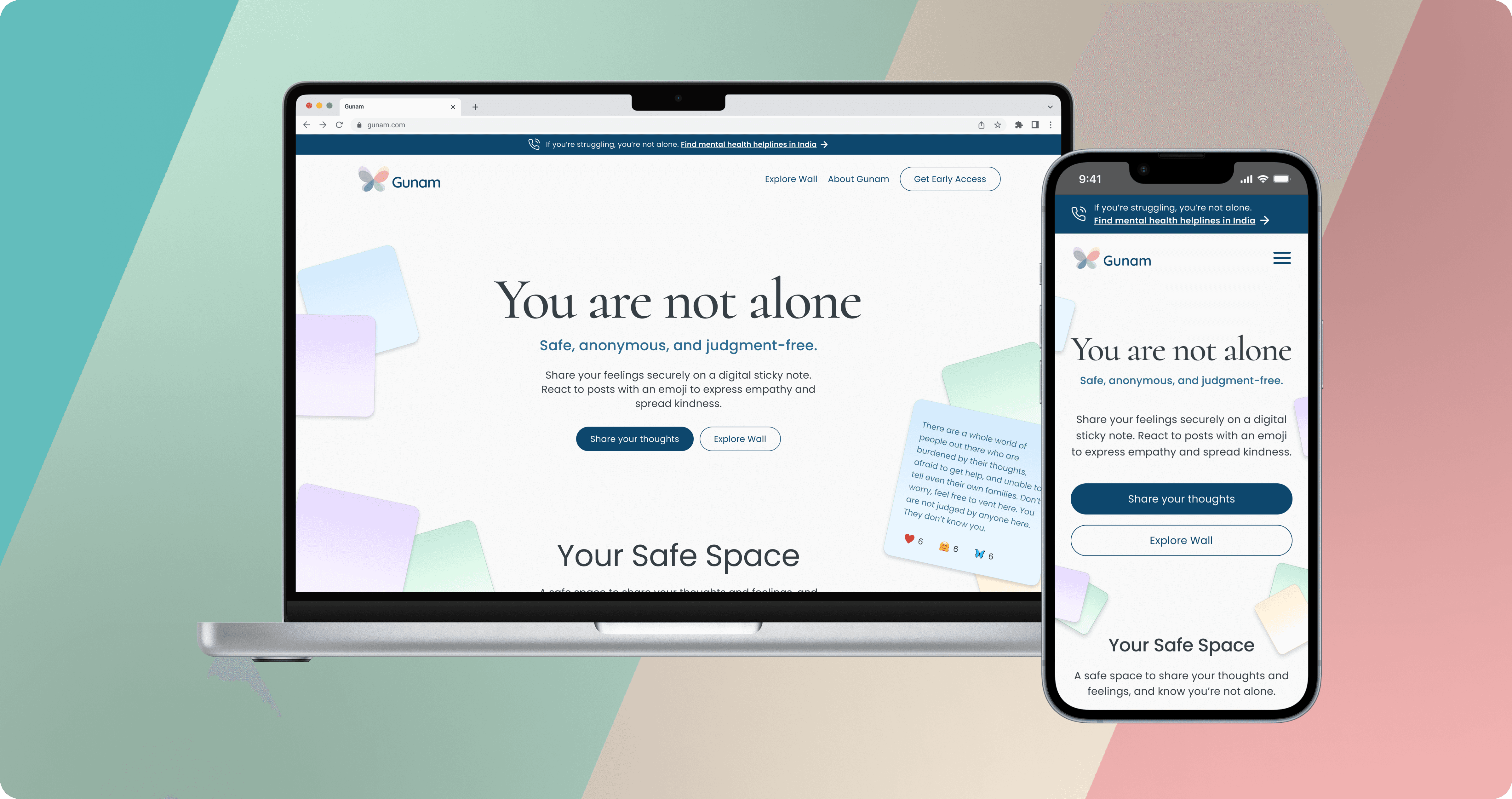
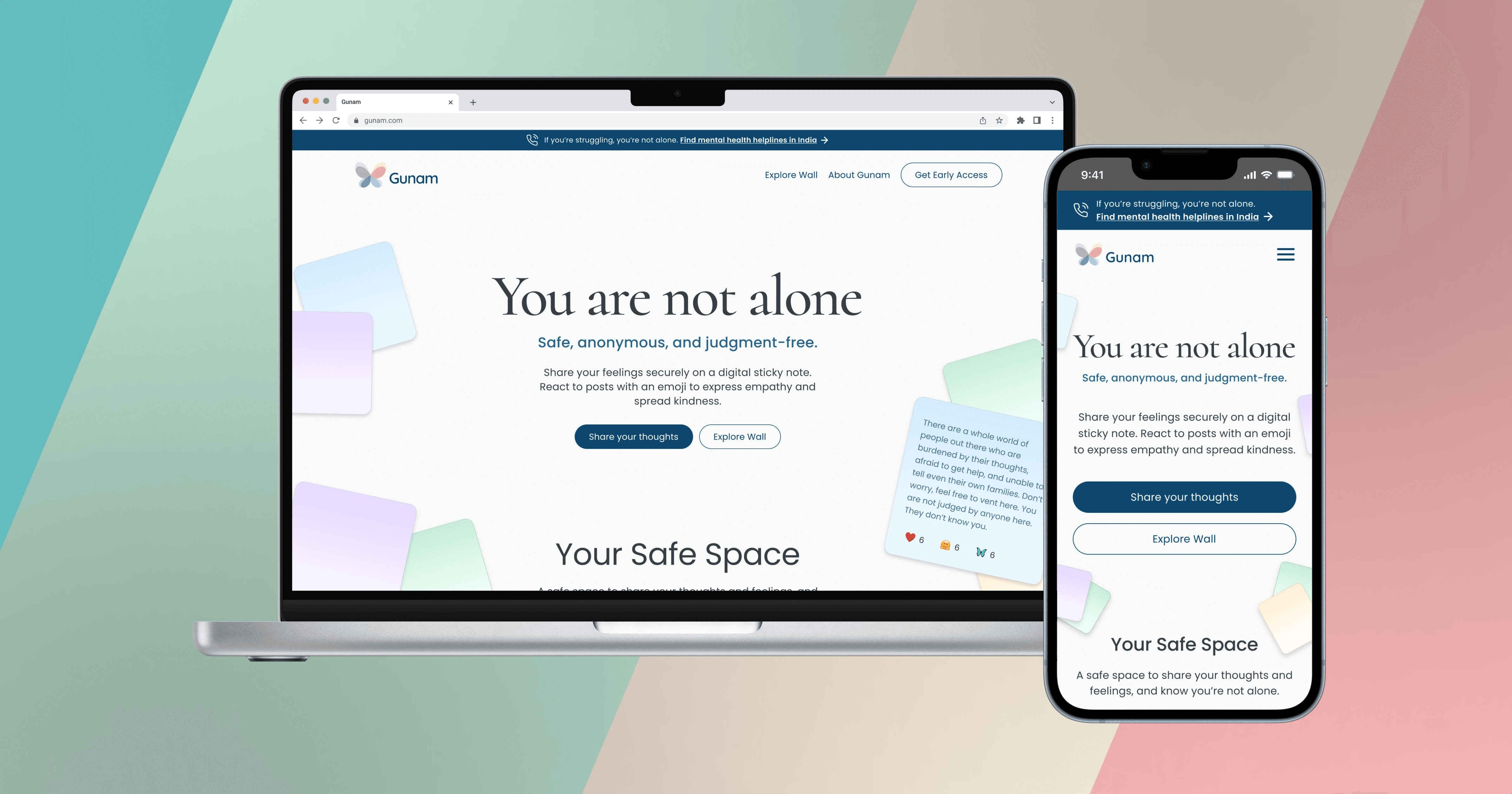
Gunam is a safe space for users to post their thoughts and feelings on digital sticky notes. The platform fosters a supportive, stigma-free community while encouraging users to sign up for Gunam’s upcoming online therapy and on-demand services.
My Role
As a product designer, I contributed across the full design process, from user research and synthesis to wireframing, prototyping, and usability testing. My focus was on translating insights into clear, accessible experiences and collaborating closely with my design partner to align visuals, interactions, and overall product direction.
Impact

20,000+ users 1st month
Early traction proved the need for a safe, anonymous mental health space.

After usability tests, all users gave Gunam an ease of use rating of 5/5.

Users felt safe sharing their stories on the platform.
The Problem
Over 80% of people in India with mental health conditions avoid treatment due to stigma.
Stigma around mental health in India prevents people from seeking help, leaving users without a safe space to share or connect with services.
HMW
How might we provide users with a welcoming, stigma-free space to share, and an easy way to learn about Gunam’s mental health services?
Share your thoughts safely and anonymously.
Select a mood and write a note to express how you feel.
View posting guidelines that promote kindness and empathy.
Explore others’ stories and feel less alone.
Read personal posts to discover shared experiences.
React with emojis and filter by mood to find what resonates.
Report concerns directly from the post menu to help keep the space safe.
Sign up for future mental health support.
Join Gunam’s waitlist for upcoming online therapy and mental health services.
Receive updates as new programs and features launch.
The Process
Validating Assumptions With Users
6 rounds of interviews revealed how to build trust in a digital mental health space.
Using a photo of a physical sticky note wall as a conversation starter, participants discussed their comfort levels with sharing in both physical and digital formats. The semi-structured interview covered topics such as anonymity, message content, and emotional safety.
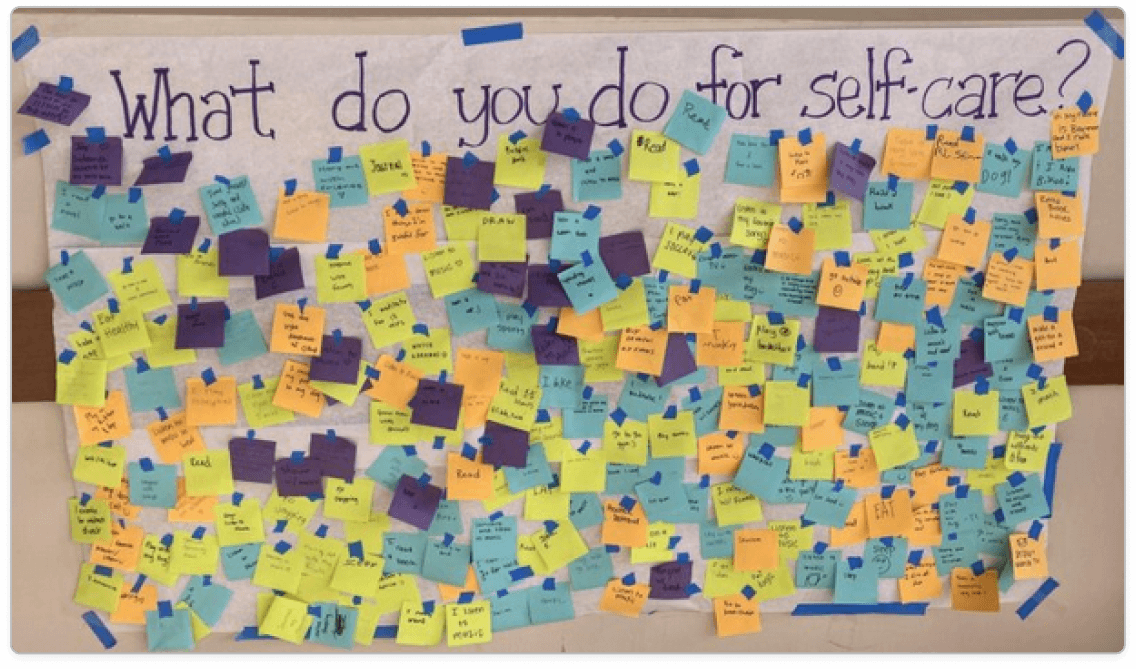
Image of sticky note wall used in interviews to spark conversation.˙
What would make participants comfortable sharing?
Data Analyst, Age 26
“I would want a safe space without judgement to share my mental health struggles.”
Product Manager, 31
“I would share more if I felt truly anonymous. I’d feel more comfortable if my data was private and I wasn’t asked for my name or personal information.”
Student, Age 30
“I find comfort through encouragement from others in similar situations. I’d probably interact by leaving an emoji reaction like a heart, hug, or comment.”
Key Insights from Affinity Mapping
Users valued safety and anonymity, but still craved connection and acknowledgment.
While anonymity made participants feel protected, it also left them wanting more ways to feel acknowledged and supported. Many mentioned wanting to comment or track their posts to feel heard, without compromising privacy.
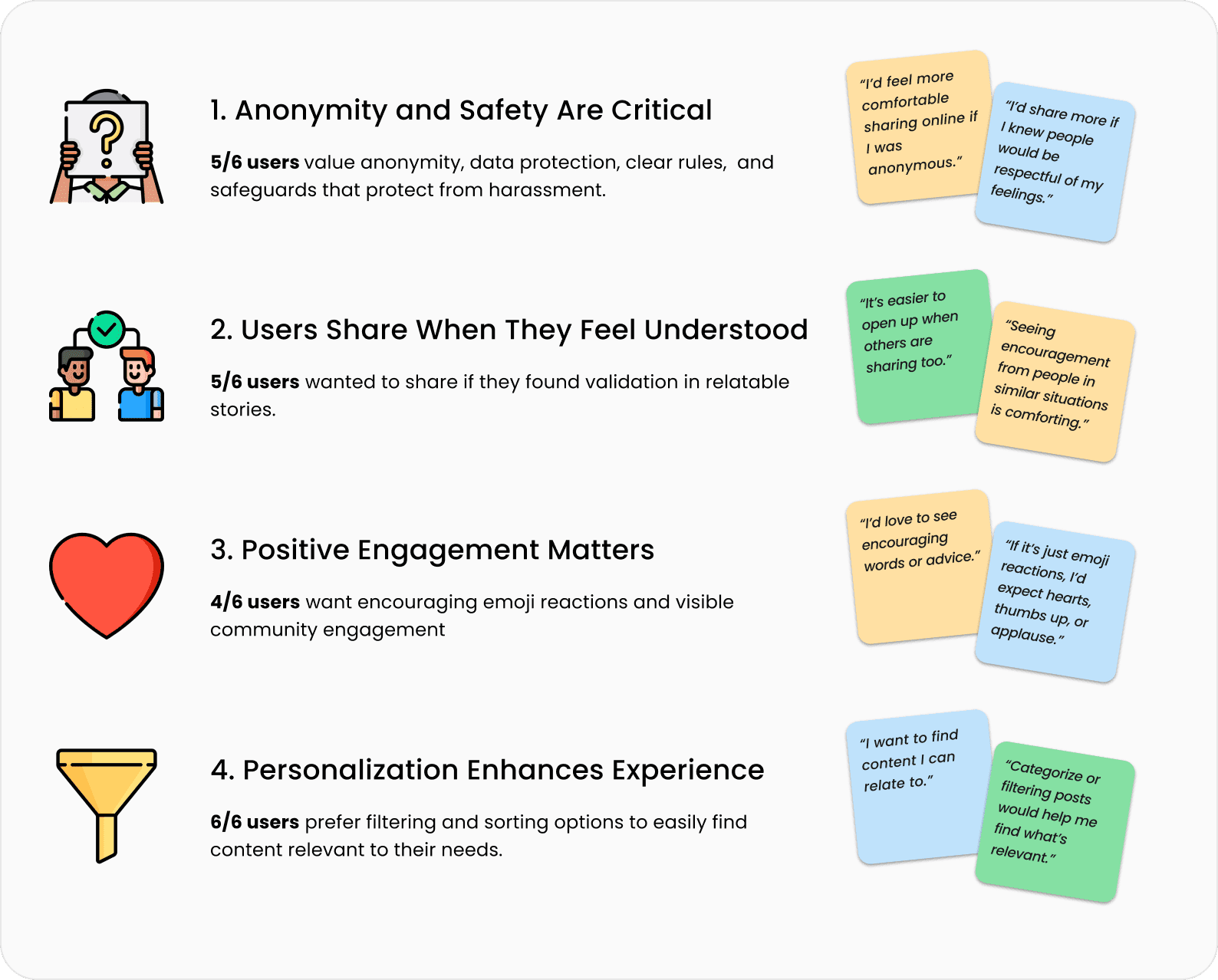
Design Constraint
Balancing validation with anonymity.

To maintain full anonymity for the MVP, features like comments and tracking posts were deferred for future exploration. Instead, we introduced preset emoji reactions to provide a lightweight, low-risk form of interaction, offering validation within safe boundaries.
Defining Persona & Needs
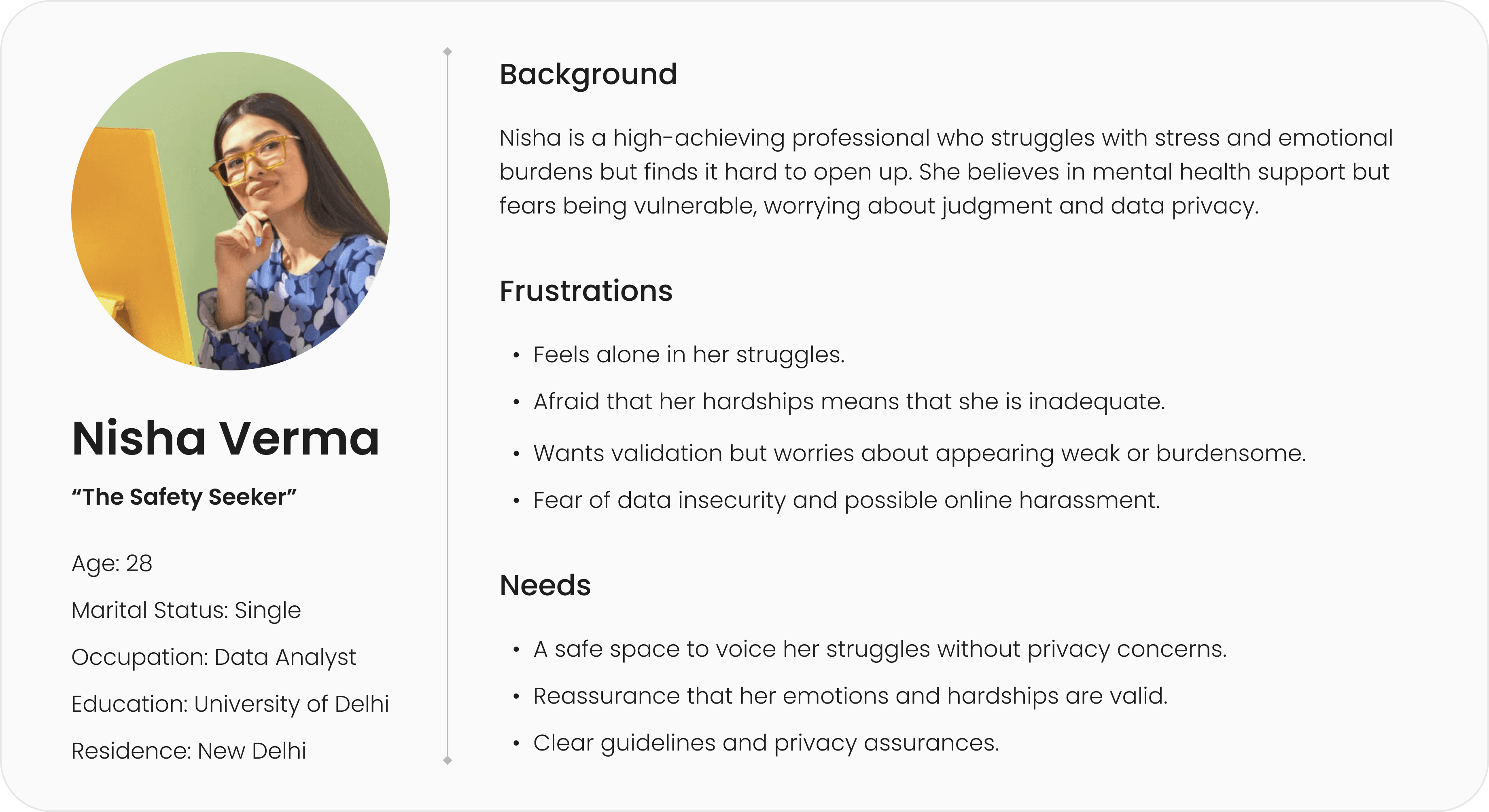
Our persona, Nisha Verma, the Safety-Seeker.
To humanize our insights, we created Nisha, a persona embodying users who value privacy and validation when sharing about mental health. Her needs shaped our design: enabling open sharing without fear of exposure and offering acknowledgment through low-risk interactions like emoji reactions.
Feature Prioritization
Short timeline led us to prioritize features based on impact and effort.
After synthesizing our findings, we evaluated features by their potential impact and feasibility (effort) to decide what to include in the MVP, ensuring we focused on features that delivered the most value early on.
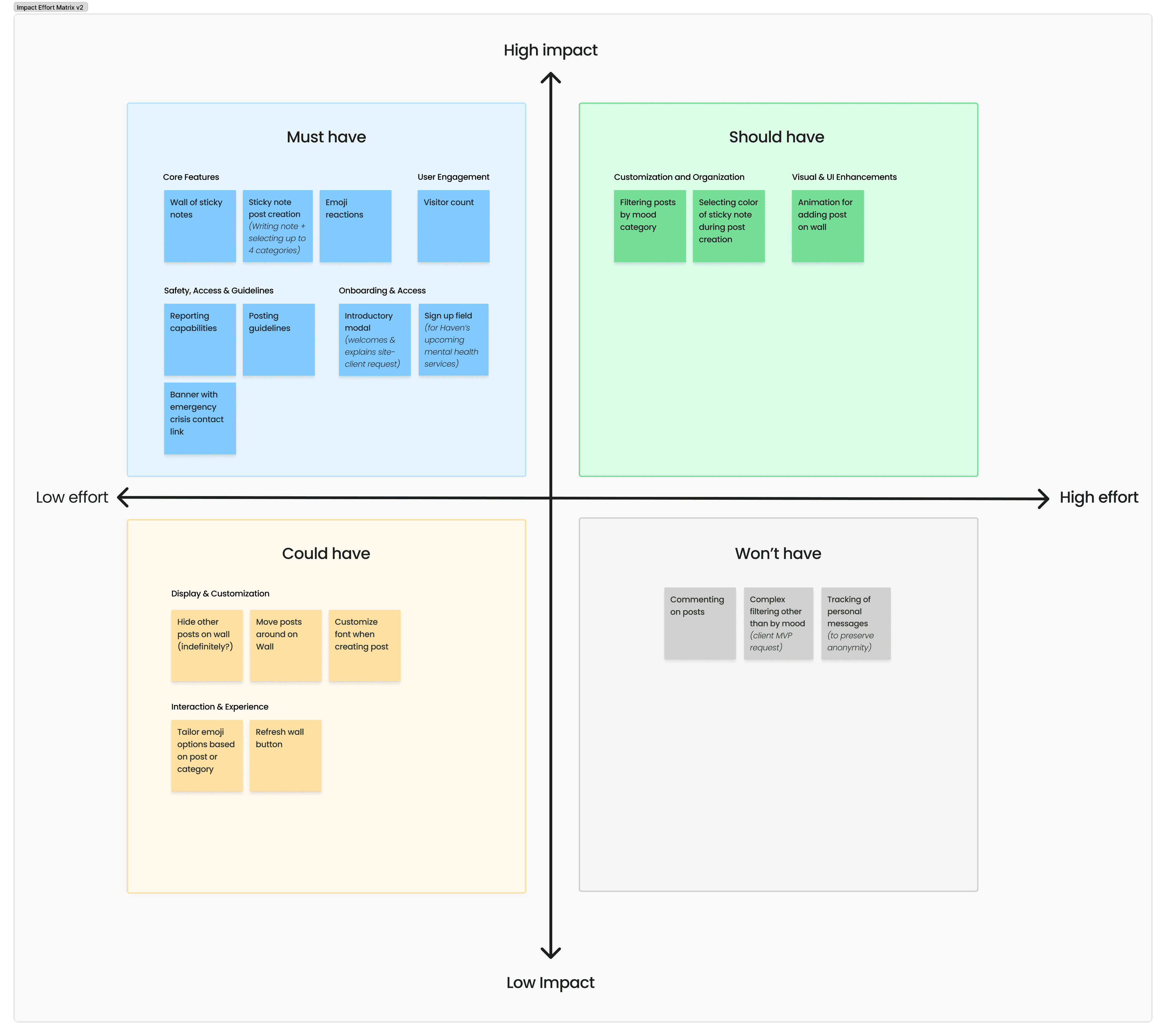
Feature prioritization matrix used to guide design decisions by impact and effort.
Sketching to Solve Key Problems
Paper sketches of the sticky note wall and post creation flow.
We sketched different wall layouts and post creation flows to visualize how users would write notes and see them appear on the wall.
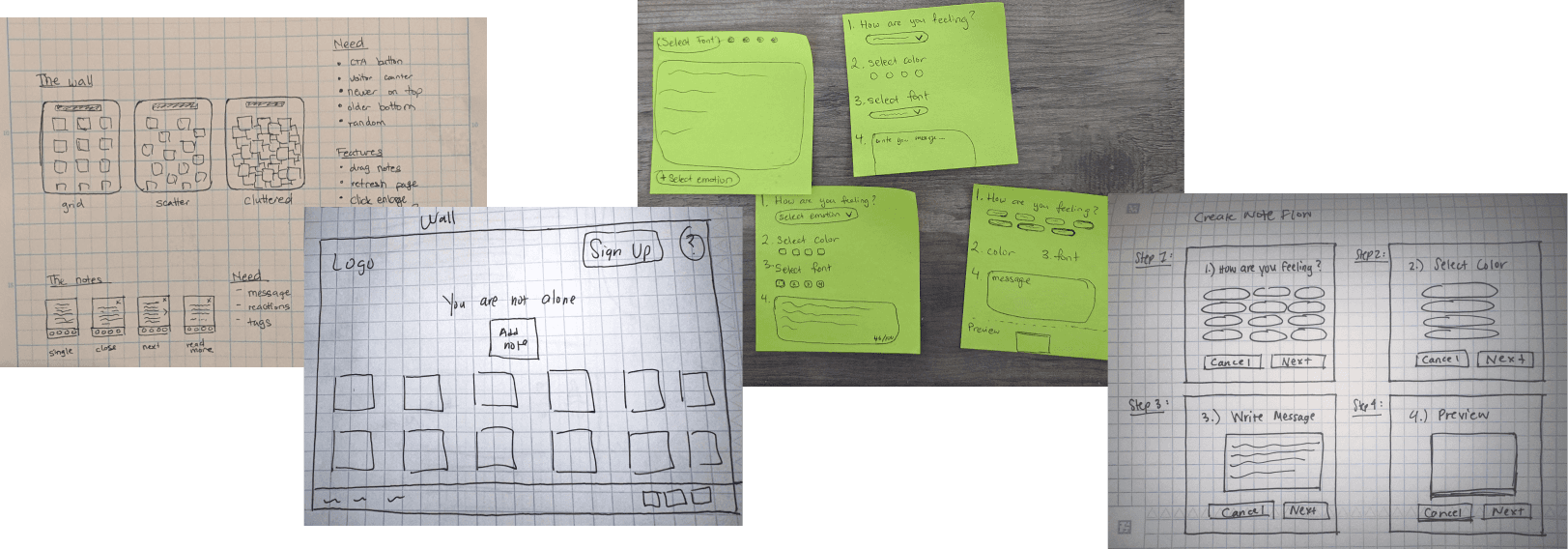
Sketches of the wall and flow of post creation.
Mapping Key User Flows
Designing clear paths for posting, reacting, and early access sign-ups.
We mapped three core interactions: posting anonymous notes, reacting to others’ posts with emojis, and signing up for early access to mental health resources. These user flows ensured each action supported Gunam’s goal of creating a safe, intuitive experience, reinforced by moderation and reporting systems to maintain community safety.
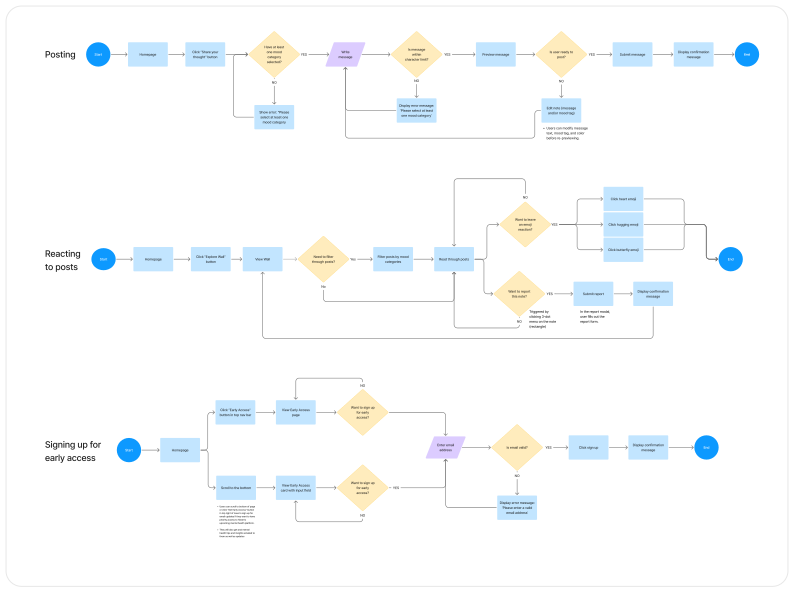
3 key user flows.
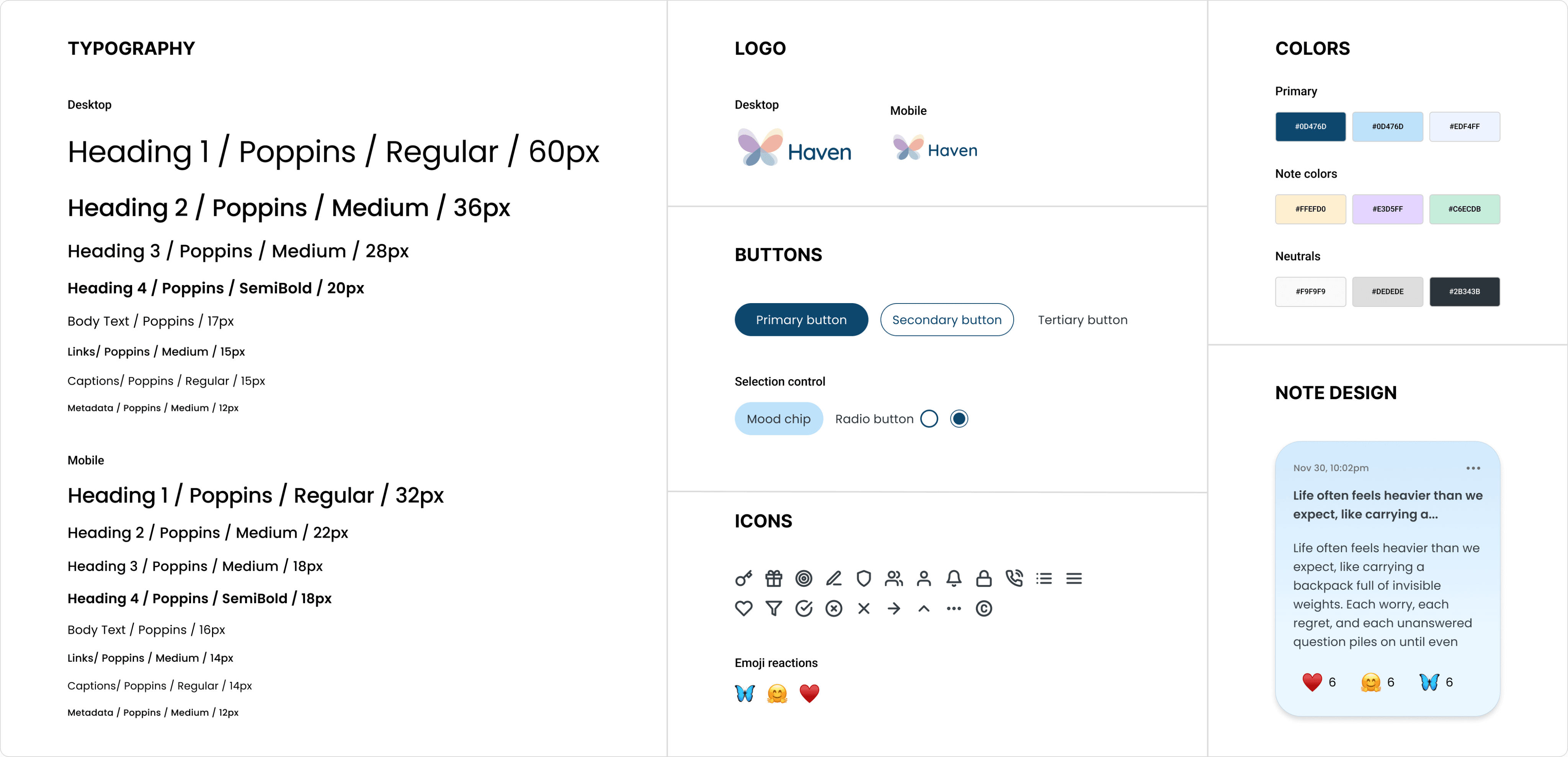
Branding
Designing Gunam’s visual identity to reflect its value proposition.
To reflect the platform’s goal of providing a safe space, the visual identity and UI kit embody safety, comfort, and belonging through soft colors and approachable design.
Logo Creation
The butterfly logo, first generated using Lovable and later refined in Figma, represents transformation and healing.

UI KIT
Low-fidelity usability testing
Moderated tests with six participants to identify friction in early desktop wireframes.
Testing Goal: Evaluate navigation of homepage layout, posting flow, and overall user trust.
Testing Insight #1
A/B/n testing revealed which layout best organized users’ posts.
We tested three layout designs: The Wall, Infinite Scroll Canvas, and Map. While the map’s novelty slightly appealed to users, we chose the wall for its simplicity, feasibility, and stronger sense of privacy.
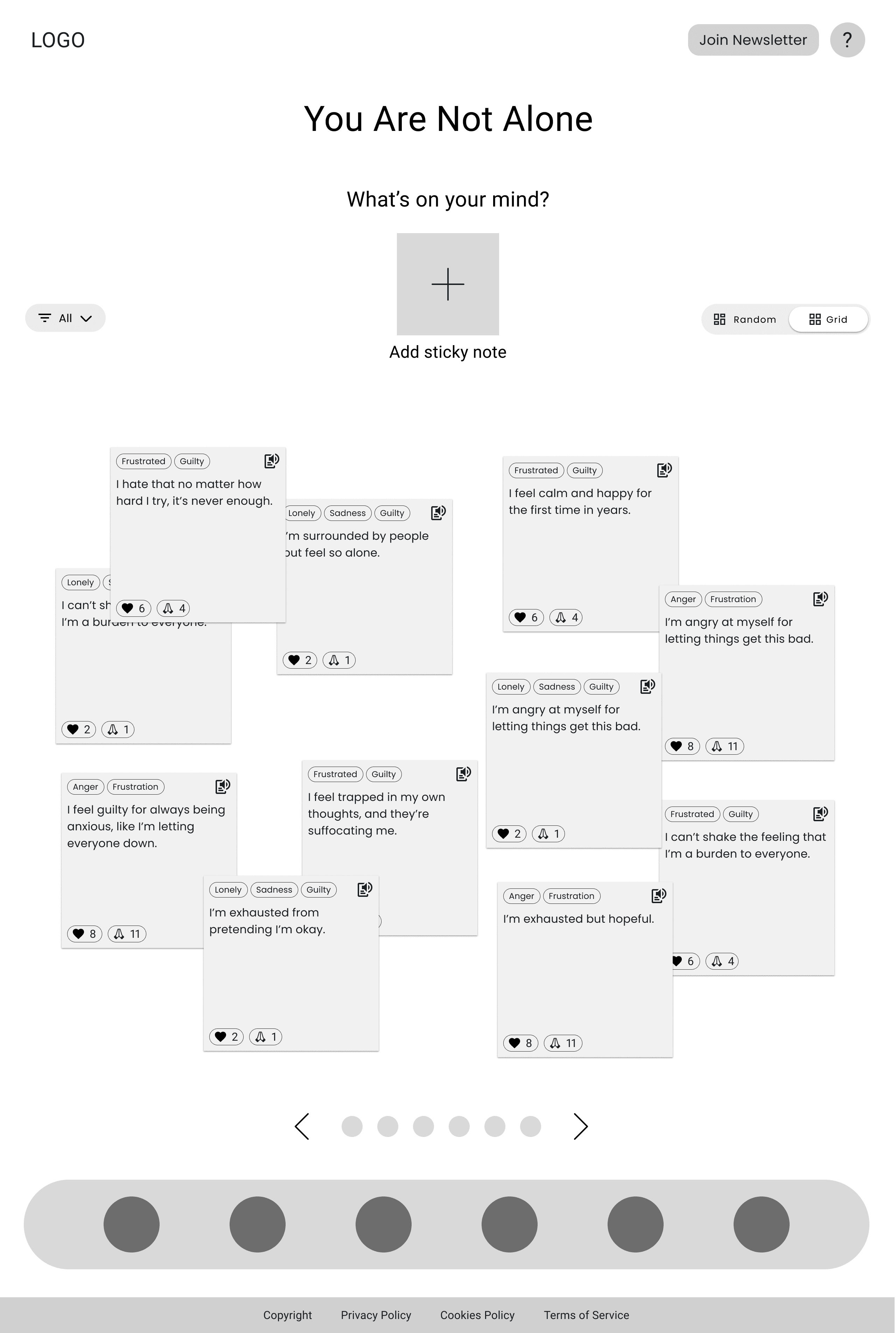
The Wall
Users were able to toggle between 2 different layouts: a 4x3 grid and a random scatter of posts across the screen.
User test results:
Most users gravitated toward the grid, finding it familiar and well-structured.
Some felt it was a bit "unnatural" and rigid.
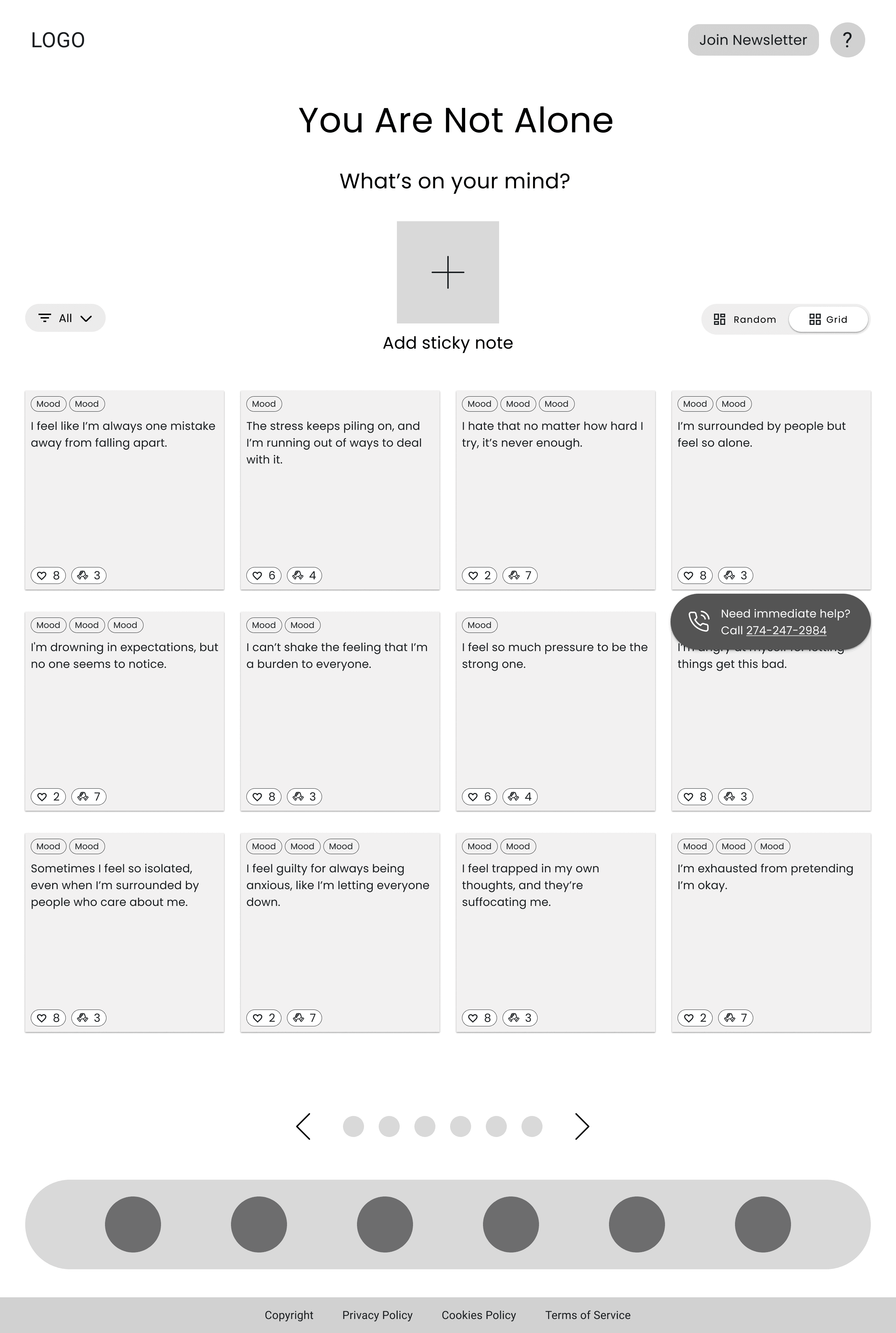
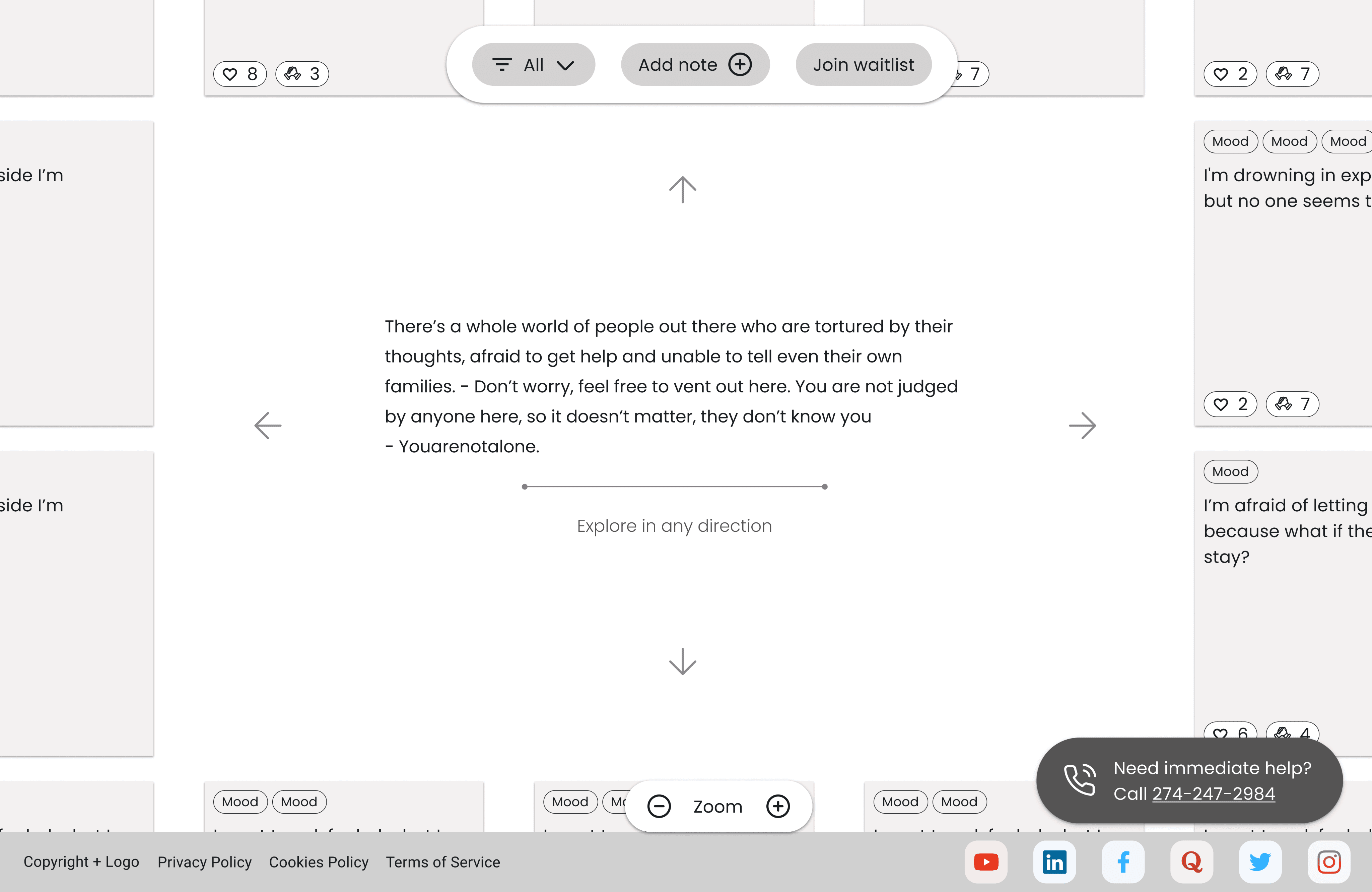
The Infinite Canvas
Users could scroll 360 degrees in any direction to explore sticky notes.
User test results:
A couple of users liked the scrolling flexibility.
Although this design was client requested, all users found it confusing and disorganized due to the lack of hierarchy.
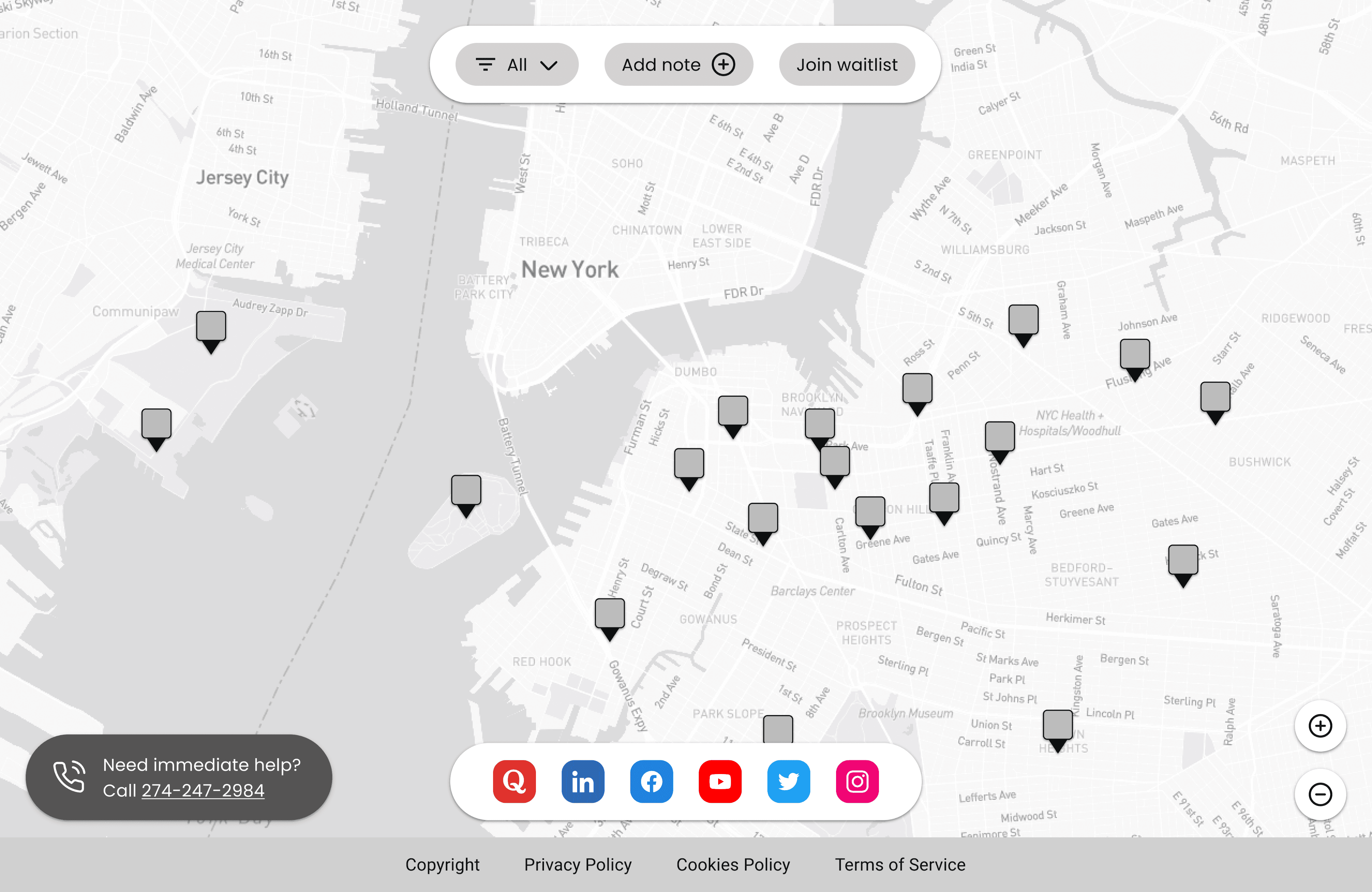
The Map
Users could drop a pin on a map, and clicking on a pin revealed a post.
User test results:
Many users liked the interactivity and authenticity.
Some users were confused and concerned about whether their location would be private due to this design.
Testing Insight #2
Too many options created friction when creating a post.
Before testing, our client requested 22 mood categories (based on their research) and wanted users to select a post color. Testing showed these options felt overwhelming and distracted users from the core action, writing a note.
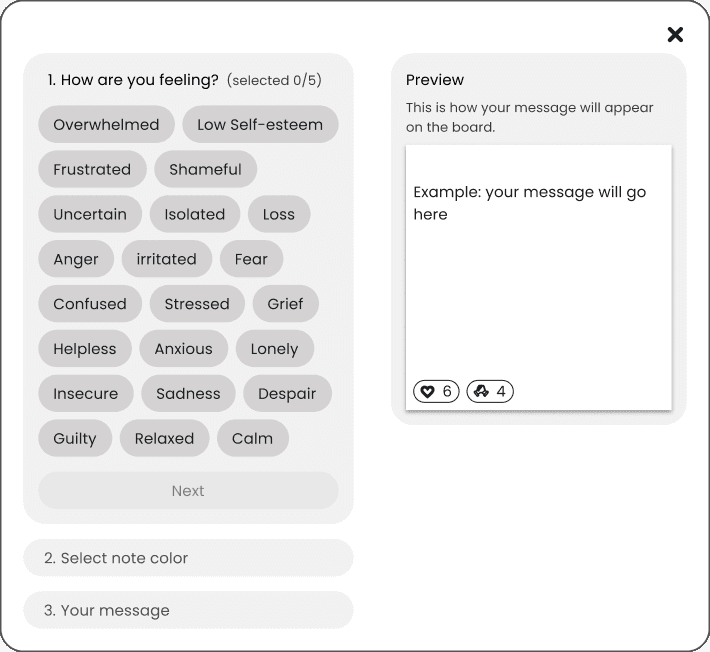
Creating a post
Users could select a mood category and color, and then write a message.
User test results:
Users liked the option to see their message displayed on the preview while writing.
The 22 mood choices caused decision fatigue.
Color selection felt unnecessary as a step. Users preferred to start writing right away.
Challenge
Re-evaluating a desktop-first assumption
We began with a desktop-first design, but our clients explained that most Indian users would access the platform from their phones. We later shifted to a mobile-first approach to better align with user behavior.
Key Iterations from usability tests
A second round of high-fidelity usability testing further validated the need for simplicity and visual design updates.
Insights from these tests guided the next round of design refinements focused on simplifying layouts and clarifying key interactions.
Iteration #1
Revamping wall
To make the wall feel more natural and less repetitive, I redesigned the wall layout into a masonry grid. The new layout created a smoother scroll experience that encouraged users to browse more posts.


Iteration #2
Refining posts
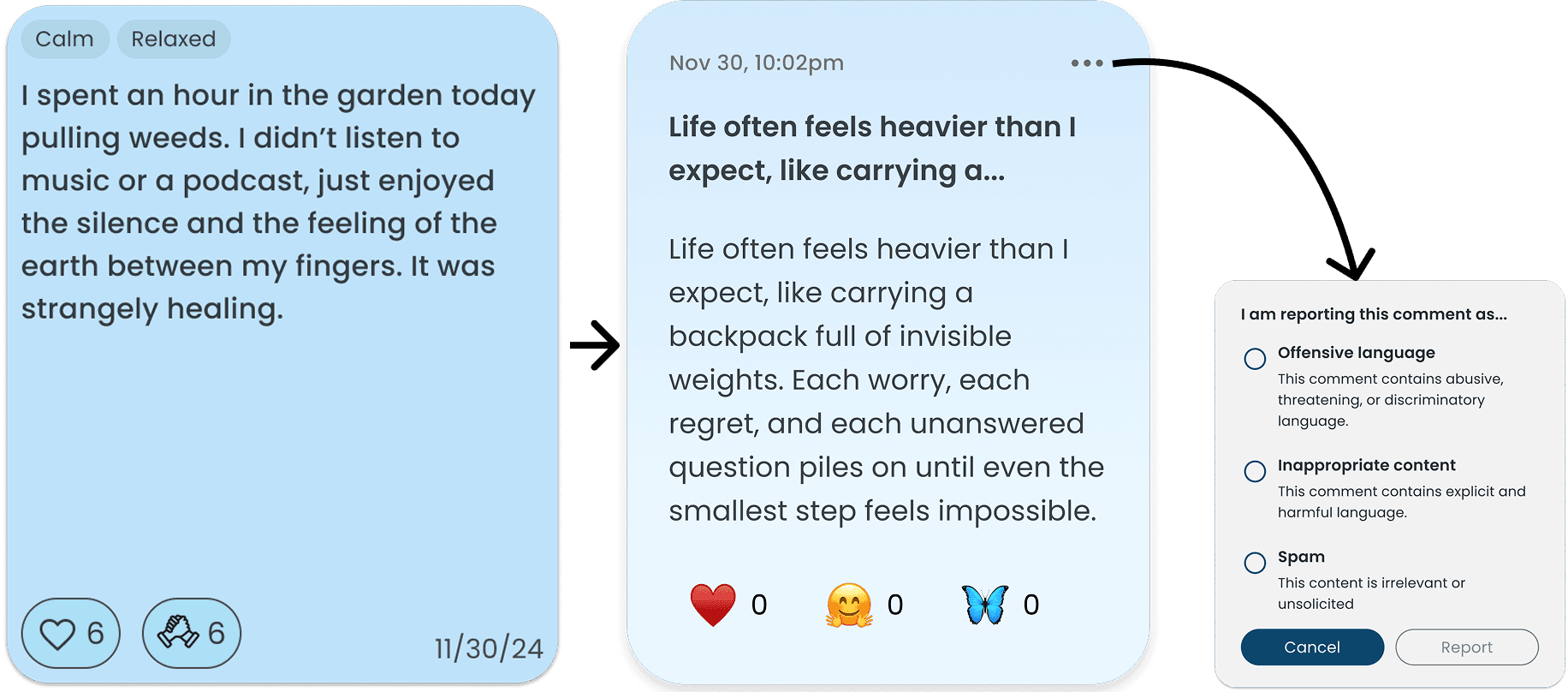
I added visual hierarchy, lighter colors with a subtle gradient, post time, a three-dot menu for reporting, and an extra emoji based on user feedback to expand emotional expression.
Iteration #3
Simplifying moods
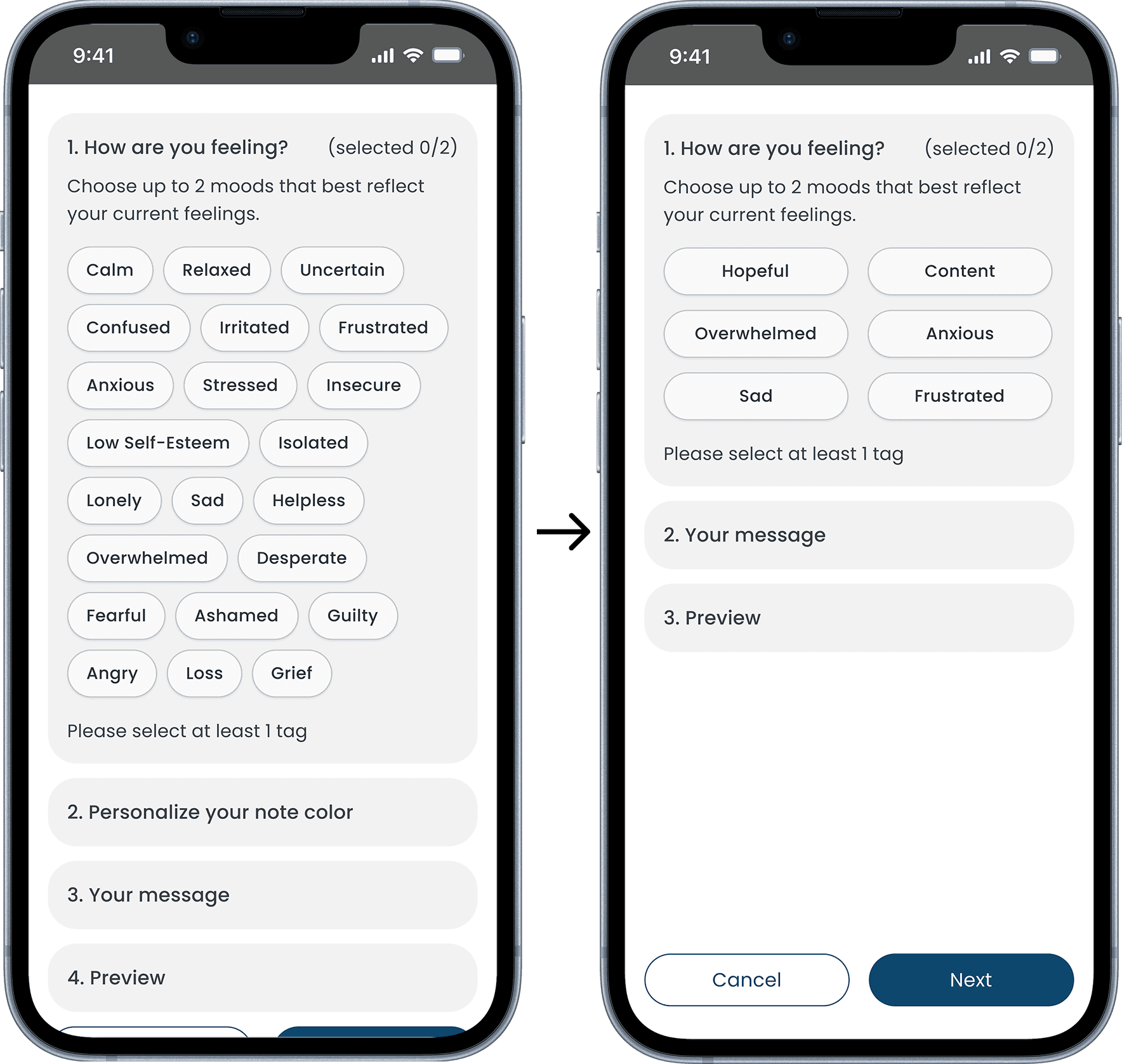
Based loosely on psychologist Dr. Robert Plutchik’s Wheel of Emotions, I refined the mood options to six core emotions. The final set felt emotionally accessible, broad enough to capture nuance, and authentic for a venting or reflective platform.
Iteration #4
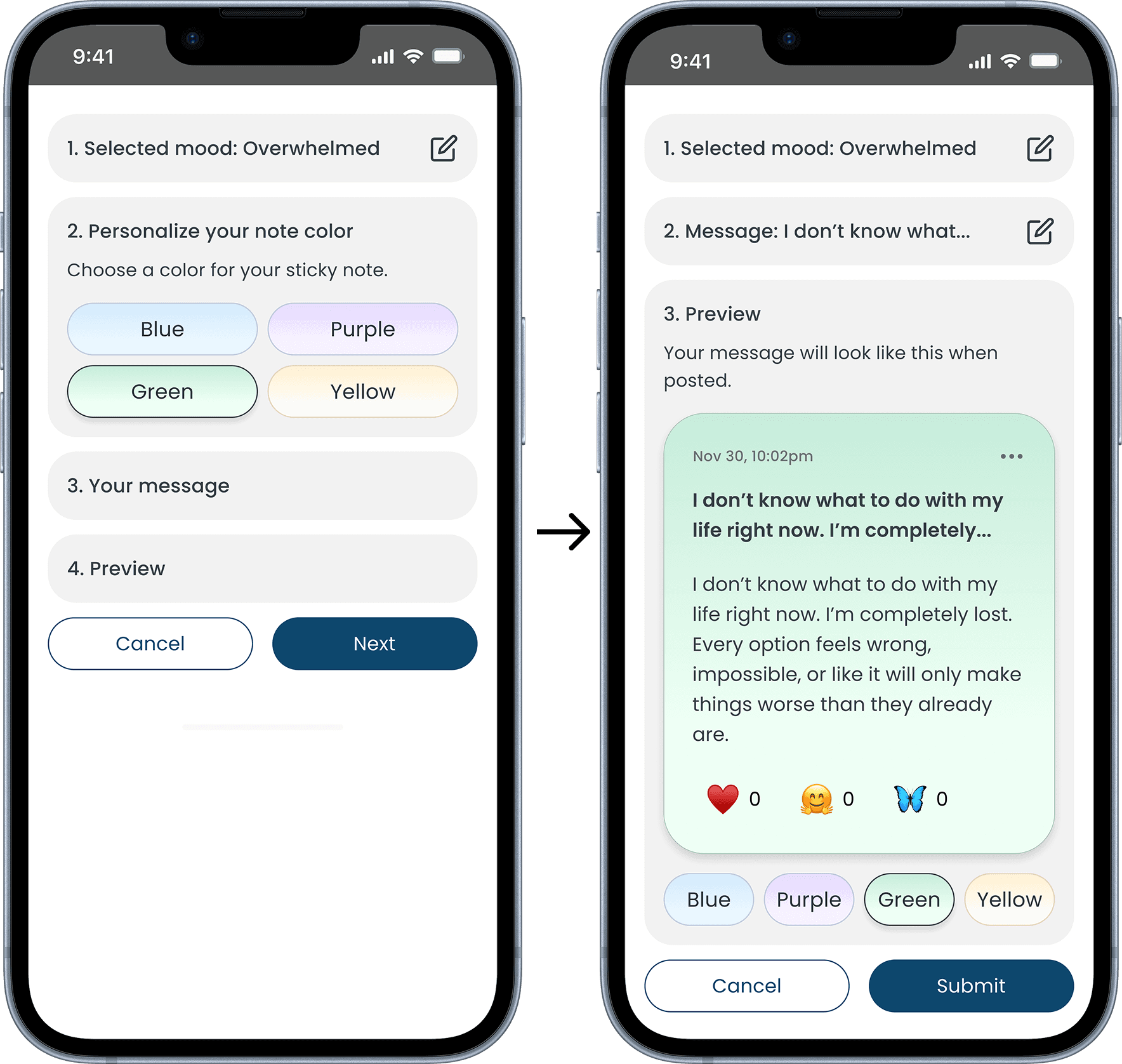
Reorganizing color selection
Selecting colors too early disrupted focus. I moved it below the preview so users could write first.
Metrics from Usability Testing
While usability scored high across all participants, feedback highlighted opportunities to deepen sense of community and perceived validation in future iterations.
Homepage
The homepage welcomes users, introduces Gunam’s mission, and invites them into a safe, anonymous space for emotional expression.

The Wall
The Explore Wall page is Gunam’s emotional hub, where users can post their feelings, explore others’ notes, and react with empathy.
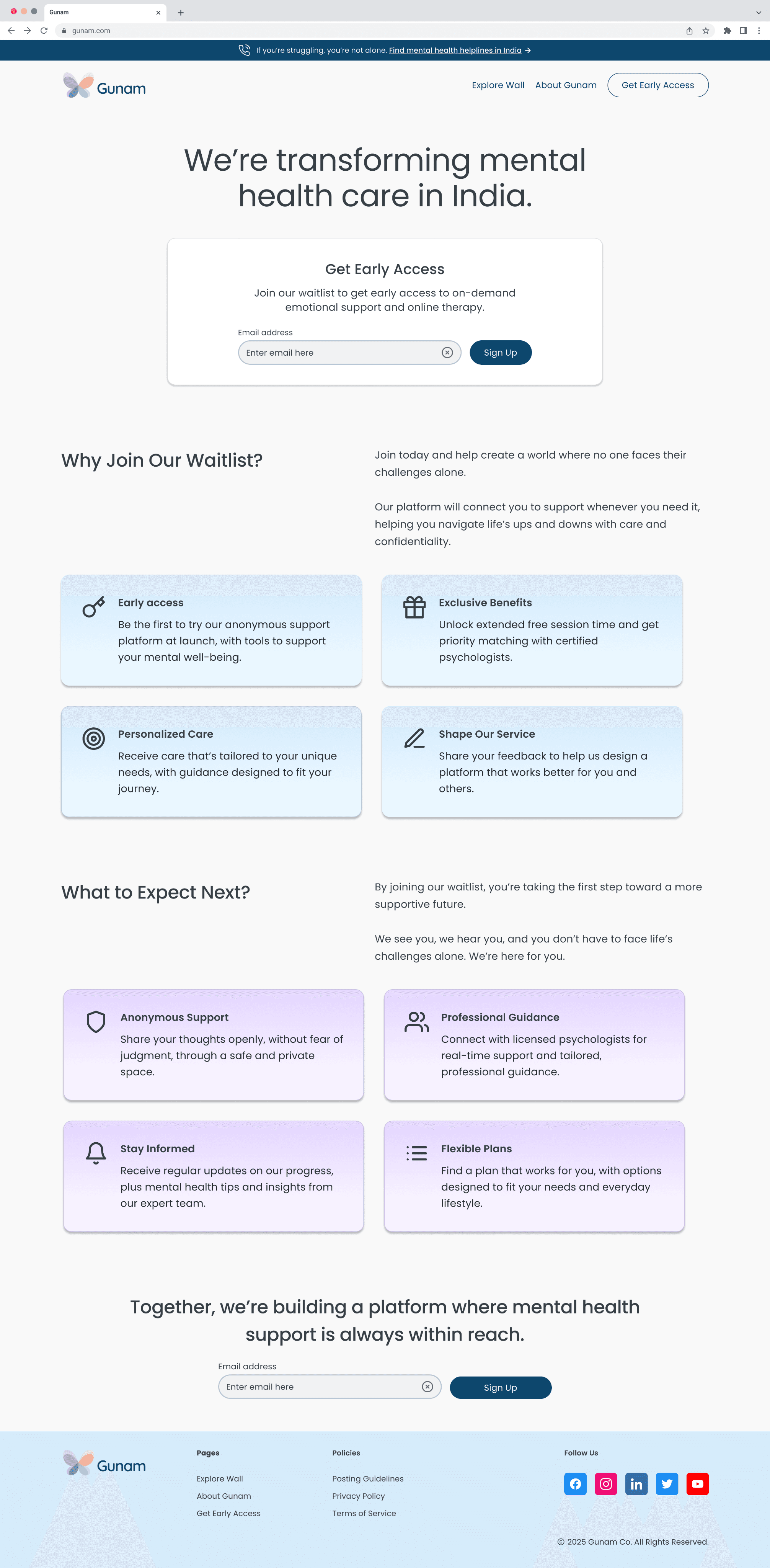
Get Early Access
The Early Access page introduces Gunam’s mission to make mental health care in India more accessible, highlights upcoming features, and invites users to join the waitlist for early access.
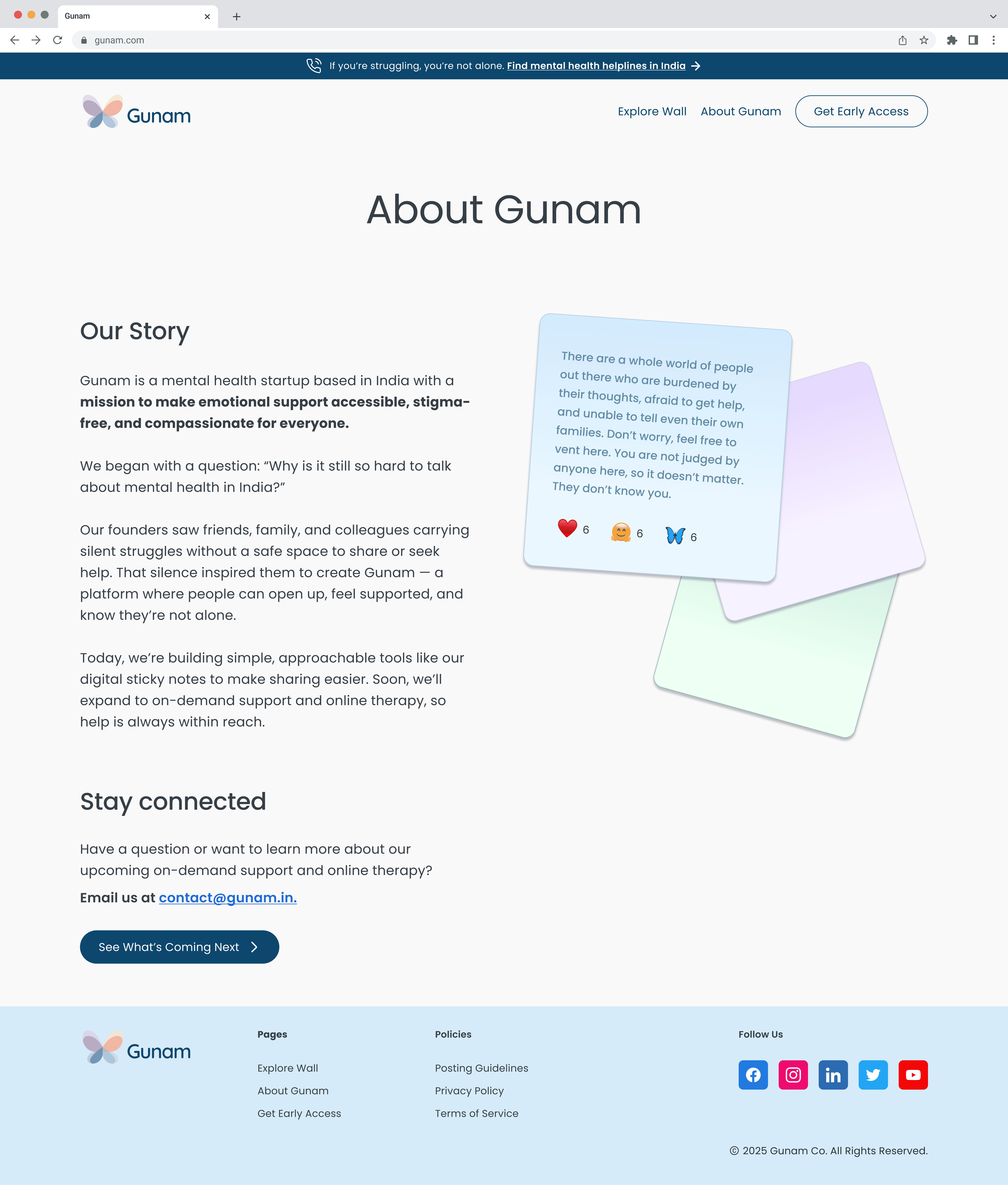
About Gunam
The About page shares Gunam’s story, communicates core values around accessibility and compassion, and provides context for the platform's mission and future direction.
Creating a post
When creating a post, users select their current mood and write a short message. This flow supports free expression while maintaining anonymity.
Outcomes
In four weeks, we designed and launched a responsive MVP that enabled anonymous community sharing and early engagement with Gunam’s mental health services.
The strong early traction (20,000+ posts in 1st month) validated users’ need for a safe, stigma-free space to express their feelings, while usability testing underscored the importance of simplicity, privacy, and emotional safety.
Reflection
Cultural Context Matters
Despite knowing that mental health stigma is high in India, interviewing U.S. participants meant missing key cultural nuances. This reinforced how vital cultural understanding is when designing for sensitive, personal experiences.